You’re in the middle of a Friday dinner rush. The oven’s full, the line’s backed up, and your best kitchen person has just left the line for the third time to answer the phone. On the other end: someone asking if you can do half pepperoni, half veggie, and whether there’s a deal on wings. This is your shop running on phone orders.
It works. It’s always worked. But here’s the question nobody’s asking out loud: what’s it actually costing you?
This is a real breakdown of what phone ordering and online ordering actually do to your profit, your staff, and your ability to grow. These are the numbers on order value, the true cost of running a phone-first operation, and the three-channel reality that most pizzeria owners are navigating without a clear map.
By the end, you’ll know exactly where the money is going, and what the right online ordering platform looks like for a shop like yours.
The hidden cost of answering the phone
Phone ordering feels free because there’s no commission, no platform fee, no obvious line item on your P&L. But that feeling is wrong, and the real cost shows up in three places most owners aren’t measuring.
1. Labor: every call pulls someone from the kitchen
When your staff answers the phone, they stop doing something else.
During a rush, that something else is almost always more valuable. Every two-minute call during peak hours is two minutes off the line, or two minutes someone isn’t prepping, boxing, or managing the building orders.
The hidden labor costs of phone ordering can amount to up to $1,500 per month for the average pizzeria. That’s not a typo. Staff time on order intake — at a fully burdened labor rate — adds up fast when you multiply it across every call, every shift, every week.
2. Accuracy: mumbled orders cost you twice
Phone orders introduce human error at every handoff. Someone mishears a topping. A modifier doesn’t get written down. A special request gets lost between the phone and the ticket. Every wrong order costs you the ingredients for the remake, the time to make it, and often the good faith of a customer who doesn’t complain but doesn’t come back.
Online orders are entered once, by the customer, exactly as they want them. Every topping, every substitution — confirmed before they ever hit Place Order. The error rate drops. So do the remakes.
3. Missed calls: the orders you never counted
During your busiest windows, some calls don’t get answered. A customer gets a busy signal, or rings out. They don’t wait. They order from somewhere that was easier to reach — and they may not think to try you again next time. Phone ordering doesn’t just have a cost per call. It has a cost per missed call that never shows up anywhere, because you never saw the order that didn’t happen.
Online orders are always bigger
18–20%
The average size difference between an online order and a phone order. Customers browsing a visual menu spend more, every time.
Online orders are 18–20% larger than phone orders at independent pizzerias. The reason isn’t that online customers are more generous, it’s that they behave differently.
“Money isn’t real when you’re shopping online. *Click* add-to-cart. No regrets.”
Overheard at International Pizza Expo, 2026.
When someone calls you, they know what they want. They say it. The call ends. There’s no natural moment for an upsell because everyone is trying to get off the phone.
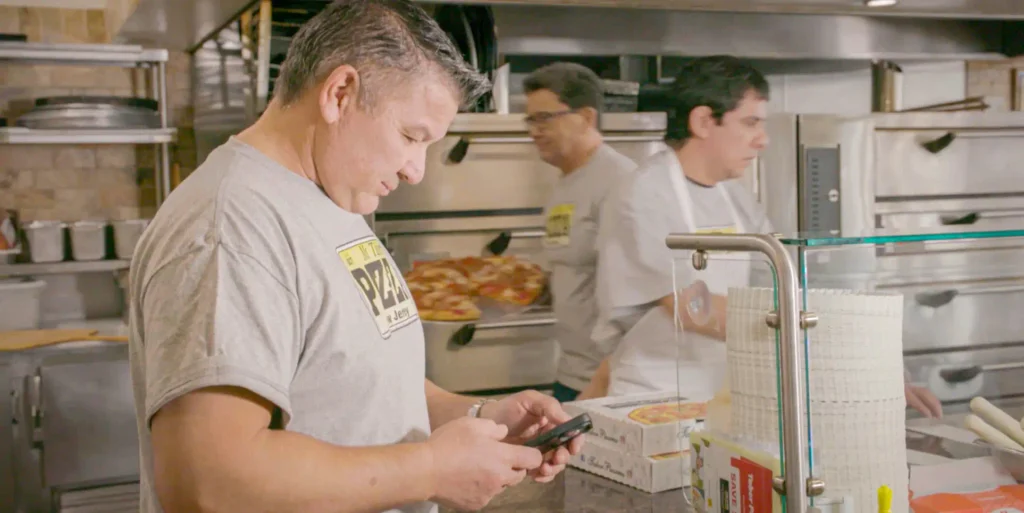
When someone browses your online menu, they have time. They see the garlic knots listed under the pizza. They notice the specialty pies section they’d never thought to ask about. They see a photo of the cannoli and add it because it looks good. They check the combo deals because they’re right there on screen. Nobody is rushing them. Nobody is waiting on them. They’re just shopping.
The visual menu is a passive upsell machine. It shows customers what they might want, in a way a two-minute phone call structurally cannot. That’s why the average online order at independent shops runs over $44, while the average phone order is $33.
The math is significant: at 100 orders per week, moving 30% of them from phone to online adds roughly $200+ per week to your revenue without a single new customer, a new menu item, or a dollar in advertising.
A deeper look at the revenue side of online ordering →
Why Online Orders Are More Valuable for Pizza Shops
The three-channel reality check: phone vs. third-party vs. direct online
Most independent pizzerias are actually managing three order channels at once, phones, third-party apps, and direct online, without ever comparing what each one is actually returning. Here’s the honest breakdown.
| PHONE ORDERS | THIRD-PARTY APPS | DIRECT ONLINE | |
| Margin you keep | 100% | 70–80% after commission | ✔ 100% |
| Customer data | Name only | None — app owns it | ✔ Full: email, history, prefs |
| Average order size | $33 | Varies (with high fees) | ✔ $44+ and growing |
| Labor required | High — staff on calls | Low intake, high cost | ✔ Zero — self-manages |
| Scalability | Capped by phone lines | Scales, but costs more | ✔ Scales with zero friction |
| Error rate | Higher — verbal intake | Moderate | ✔ Low — customer confirms |
| Rush management | Bottleneck risk | Limited control | ✔ ETA adjustment, stays live |
| Upsell opportunity | Low — staff-dependent | Built into app | ✔ Built into your menu |
| Available 24/7 | No | Yes | ✔ Yes |
| Setup complexity | None — already set up | Moderate | ✔ Days with right platform |
Source: Slice platform data, 2025–2026. Third-party commission range reflects industry standard 15–30% depending on platform and deal.
Phone orders: the margin is fine, the ceiling is low
You keep every dollar, but your order volume is capped by how many people can answer calls, and that cap hits exactly when you need capacity most: during a rush. Phone orders don’t scale. And as your shop grows, they become an operational bottleneck before they become a profit problem.
Third-party apps: discovery tool, not a business model
Third-party apps solved a real problem by putting independent shops in front of customers who wouldn’t have found them otherwise. But the economics only work as a discovery channel. At 20–30% commission per order, a $44 online order yields $31-35. Add delivery costs and you’re closer to break-even on the order itself. And the customer? They belong to the app. Their data, their email, their reorder behavior, all of it stays on the platform. You made the pizza. They built the relationship.
The right move with third-party apps isn’t to quit them cold turkey. The move is to use them for discovery and actively move customers to your direct channel over time.
Get the breakdown →
First-party vs. third-party ordering
Direct online ordering: the channel that compounds
Direct online ordering is the only channel where you keep 100% of the margin AND own the customer. Every person who orders through your website or your Slice page is a contact you can reach again: their email, their order history, the ability to send them a deal when it’s slow on a Tuesday. That data is the foundation of every retention and win-back campaign that actually works.
And unlike phones, it scales without adding staff. Your online ordering system handles intake, confirmation, and POS routing. Your team stays on the line and the oven. Volume goes up; chaos doesn’t.
The real solution: don’t choose, optimize both
Most guides tell you to ditch the phone and go all-in on online ordering. That’s not realistic and it’s not the right call. Some customers will always call. That’s not a problem to eliminate. It’s a constraint to manage.
The smarter move is to stop treating phone and online as an either/or and start treating them as a system.
Here’s what that looks like in practice.
Automate the phone line, and stop losing orders to it
AI-powered phone ordering lets you capture every call without tying up a single staff member. The call comes in. The automated system takes the order, correctly, completely, without putting anyone on hold or pulling your kitchen person off the line. Your team stays focused. The order goes through. No missed calls, no wrong toppings, no labor cost.
Slice’s Phone Ordering product does exactly this: it answers calls and takes orders on your behalf, so your phones stay open even during a full dinner rush. For shops that do significant phone volume, it’s the operational unlock that makes everything else work better.
Build your direct online channel and own the customer
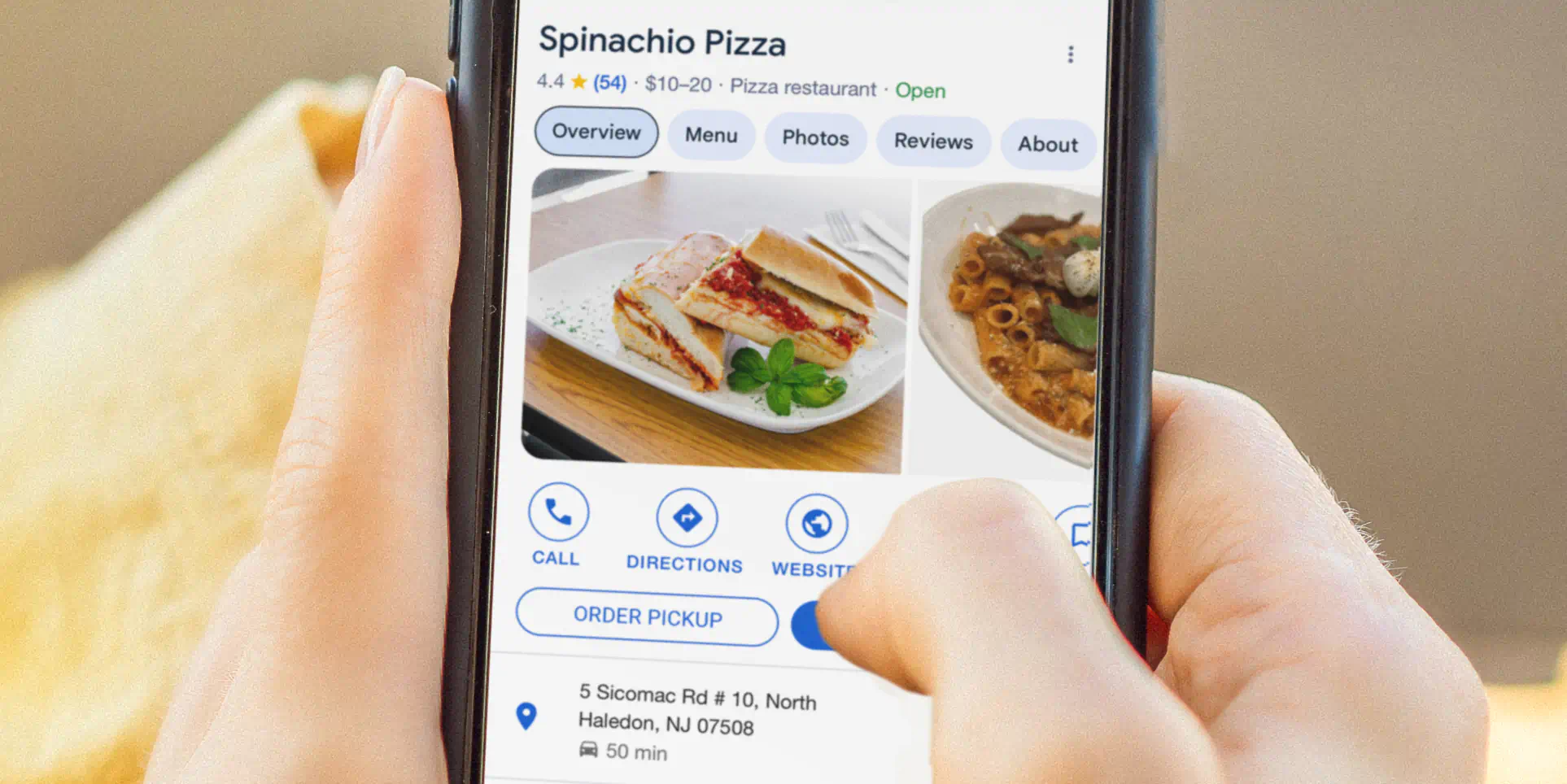
While you’re capturing phone orders automatically, build the channel that compounds. Get your online ordering link on your Google Business Profile. Put it in your Instagram bio. Print it on your receipt tape and your pizza boxes. Every customer who switches from calling to ordering online is one more contact in your database and one more person you can market to directly.
The goal isn’t 0% phone. The goal is a channel mix where direct online is growing month over month and third-party is shrinking as a percentage of your total volume.
Use your data to close the loop
When your online ordering and phone ordering feed into the same POS, you have a complete picture of your customer base: who orders, what they order, when they order, how often they order. That data is what makes automated win-back campaigns, targeted specials, and smart menu decisions possible. It’s also what’s impossible when your phone orders are manual and your online orders live in a third-party app.
The full breakdown on what to do with that data once you have it →
Your customer data is your secret weapon
How to pick the right online ordering system for your shop
Not all online ordering platforms are built for pizza. A system designed for a general restaurant (or worse, built as a bolt-on to a payments platform) will fall short in ways that cost you orders before you ever notice.
Here’s what to look for:
- Pizza-native menu architecture — Half-and-half topping support, split pricing, customization that works cleanly in mobile checkout without requiring a phone call to clarify
- Real POS integration — Online orders should flow directly to your prep screen without anyone re-entering them. Anything else is a labor cost and an error risk on every single order
- ETA management during rushes — The ability to extend your quoted times without going offline.
- Customer data ownership — Every order should add a contact to your database, not someone else’s
- A support team that understands what a Friday dinner rush actually is — Not a generic help article, an actual human
Slice is built specifically for independent pizzerias. That specificity shows up in features that general restaurant platforms handle generically, or don’t handle at all.
See the full setup guide and the platform comparison checklist for more.
Your next move
You’ve seen the numbers. Online orders are 18–20% larger. Direct ordering keeps 100% of the margin. Automating your phone line captures the calls you’re currently losing. And a direct channel that grows month over month is the only one that compounds.
The question isn’t whether online ordering is worth it for your shop. It is.
The question is whether the platform you’re on, or the one you’re evaluating is actually built for pizza.
Isn’t answering the phone free?
Not really. Every minute your staff is on the phone is a minute they’re not prepping, managing orders, or helping customers in the shop. That time has a real cost: labor at full rate, multiplied across every call, every shift. Add the mistakes that come from verbal order intake (half toppings confused, specials forgotten, orders re-entered wrong) and the actual cost of a phone-first operation can run $1,500+ per month for the average shop.
How much bigger are online orders, really?
About 18–20% bigger on average. When people see your menu on a screen, they browse. They see the combos, the specialty pies, the photos of that premium pizza. They add things they wouldn’t think to ask for on a call. On the phone, everyone’s rushing, the customer, your staff, and they order less. The visual menu is a passive upsell that phone ordering structurally can’t replicate.
So I should ditch phone orders completely?
No. Some customers will always call, and that’s fine. The move is to stop treating the phone as a manual process that costs you staff attention. Phone ordering captures calls without tying up your team. Your people stay in the kitchen. The order still comes in. You get the best of both channels without the operational cost of running a phone-first system.
Aren’t third-party apps the easiest option?
Easiest for them, not for you. Third-party apps take 20–30% per order, own your customer data, and create a dependency that’s hard to break. They’re useful as a discovery channel for new customers, but running your repeat business through them means paying commission on every order from someone who already knows and loves your shop. Direct online ordering lets you keep 100% and actually own the customer relationship.
What makes a good pizza ordering system?
One that actually understands pizza. Complex toppings, half-and-halves, specialty coupons, large catering orders: it handles all of that without breaking. It integrates natively with your POS so nothing gets lost between the order and the kitchen. It gives you ETA control during rushes. And when something breaks on a Friday night, there’s a real person to call, not just a help article.