
Three operators chime in on the things most shop owners are only thinking. Here are the 8 takeaways worth writing down.
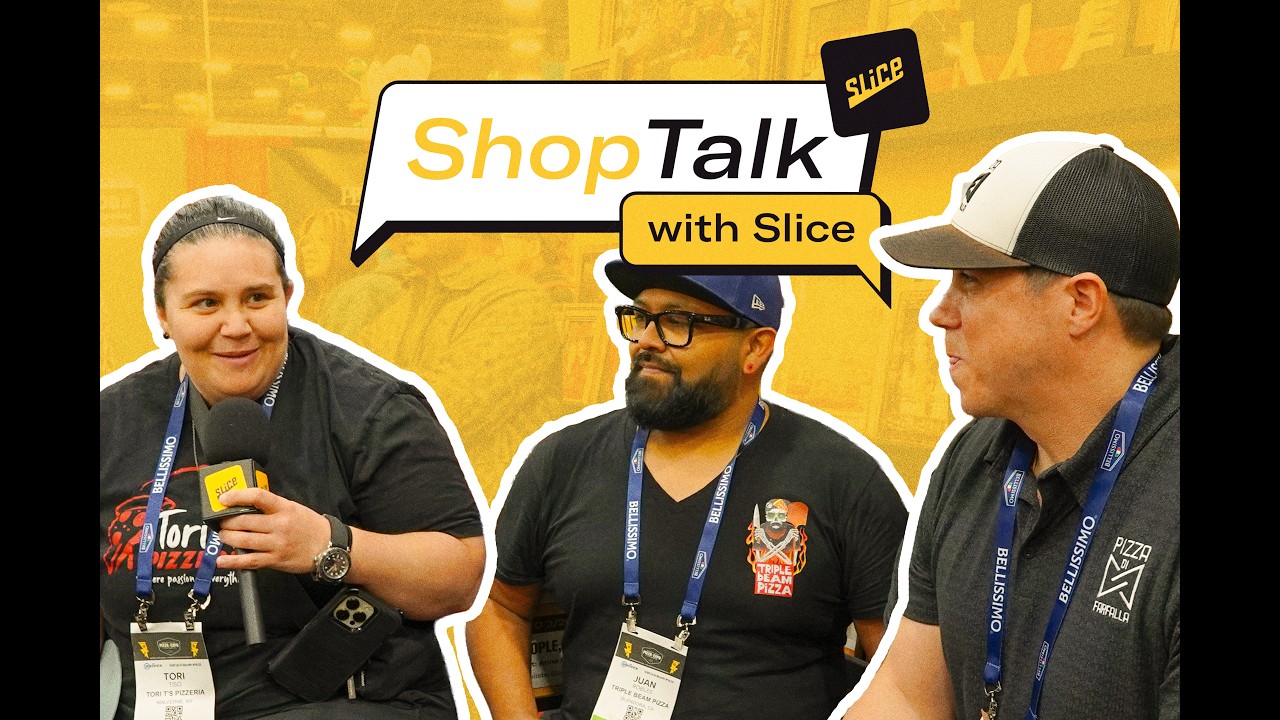
In this episode of Shop Talk, Bruce Irving sat down with Giovanni Oriente (Pizza Di Farfalla), Juan Robles (Triple Beam), and Victoria Tiso (Tori T’s) who, outside of pizza, have almost nothing in common on paper: different cities, different styles, different scales.
But, together, the same lessons kept surfacing:
- Small menus
- Real community
- Social media with a point of view
- A shared willingness to cut things that weren’t working, even when it was hard
View the full Shop Talk episode here 👇
Cutting your menu might be the best sales move you ever make
For all three owners, a smaller menu made their businesses more profitable, not less.
Tori cut her kitchen entirely, stripping it back to pizza-only after running at a 60/40 pizza-to-food split.
The result:
- $700 a week in waste eliminated
- Staff cut from 16 to 8
- Savings redirected into marketing
- Sales went up
Gio dropped Detroit-style entirely, not because it wasn’t good, but because doing it right required more space and cool-down time than their 250 sq ft kitchen could handle. Cutting it let them focus on what they do best.
I started in a small slice shop. That’s what I should be. I was losing sense of what I wanted my business to be. But honing in on that now, everything in the kitchen can be used on a pizza.
Tori T.
Juan’s framework at Triple Beam: 12 items, but every ingredient appears in at least two dishes. Nothing single-use, nothing that creates waste.
Discounting is a strategy. Not a reflex.
Gio runs a 10% off Tuesday code, but only because Tuesdays are new hours they’re trying to build. It’s intentional, temporary, and tied to a specific goal.
With the right strategy, discounts make sense. But overall, we never really discount our pizzas. Our pizza’s good. Discounts don’t give it the full glory it needs.
Giovanni Oriente
“If pizza is your premier product, discounting on third-party platforms, where they’re already taking 30%, compounds the damage,” Tori says. She tested it. She didn’t see a meaningful lift.
The framework:
Social media works best when you have a point of view
Tori’s business is up 30%, and she credits this to not playing it safe online.
She went from polished, safe content, to hot takes and opinions about underdone pizza, pizza ranking problems, and being a woman in the industry, to name a few. And, as expected, people wanted to argue with her, while also sharing her POVs.
Everyone wants a story. How do I get people to taste my pizza? I started in on my hot takes. If I can get people to come in and try it, I can afford to create some controversy, but not enough where they hate me.
Tori T.
Instagram wins customers, but you need to know where all your customers are
Tori, Juan, and Gio all named Instagram as their primary sales driver. But Tori’s platform breakdown is more useful than just “post on Instagram”:
- Facebook
- still heavy with 50–70 yr-old customers
- Instagram
- 30–40 yr-olds, highest purchase intent.
- TikTok
- under 30, growing fast.
Post everywhere. But know which platform your actual customer lives on, and make sure your content earns real estate there.
Post timing matters more than most operators realize
Juan posts at 10–11am. Not a best practice, but a deliberate choice. That’s when people are deciding what they’re eating for lunch and dinner.
Too early and it gets buried.
Too late and you’ve missed the planning window.
People are already talking with their family about what they’re having by 12, 1 o’clock. If it goes out too early, it gets out of that filter zone a lot sooner.
Juan Robles, Triple Beam Pizza
Juan’s other move: spread new menu launches across multiple days. Each day, one item gets the spotlight. The algorithm gets multiple chances. Customers stay engaged longer.
Community comes before customers
Juan’s playbook for opening a new location starts with the chamber of commerce. A soft opening for the neighborhood. Employees who are part of the community, and represent the shop because they want to.
Connect with the community and the people first. Get your employees — who are part of that community — to bring people in. You get word of mouth on the street. They bring their friends, their friends’ friends, their family. Everything else becomes fluid from there.
Juan Robles
Google Ads outperformed third-party platform ads
Tori tested the full stack: DoorDash, Grubhub, Uber Eats ads, Google, Instagram, Facebook.
What she found was, third-party platform ads moved the needle the least. Being at the top of a delivery app doesn’t matter if someone else is running a buy-one-get-one next to you.
People in the car looking for food — they’re on Google. I’m right off a major parkway. Google Ads got me more people quickly. And you can set exactly what you want to spend.
Tori T.
Cross-utilization is the unlock for a lean menu that doesn’t feel thin
Juan’s rule: every ingredient has to appear in at least two items. If pesto goes on one pizza, it goes on something else too.
He layers seasonality on top, sourcing what’s coming in abundance next season, building recipes around those ingredients, and launching a menu that’s already cost-optimized before it hits the board.
I change my menu with each season because those ingredients are less expensive and better quality. And when that item comes back, the customers who loved it get stoked. That engagement is real.
Juan Robles
The result is a menu that feels intentional while keeping food costs and waste under control.
Twelve items across four locations. Everything cross-utilized. Nothing going bad in the walk-in.