
Running an independent pizzeria in 2026 means online ordering isn’t a feature, it’s the infrastructure.
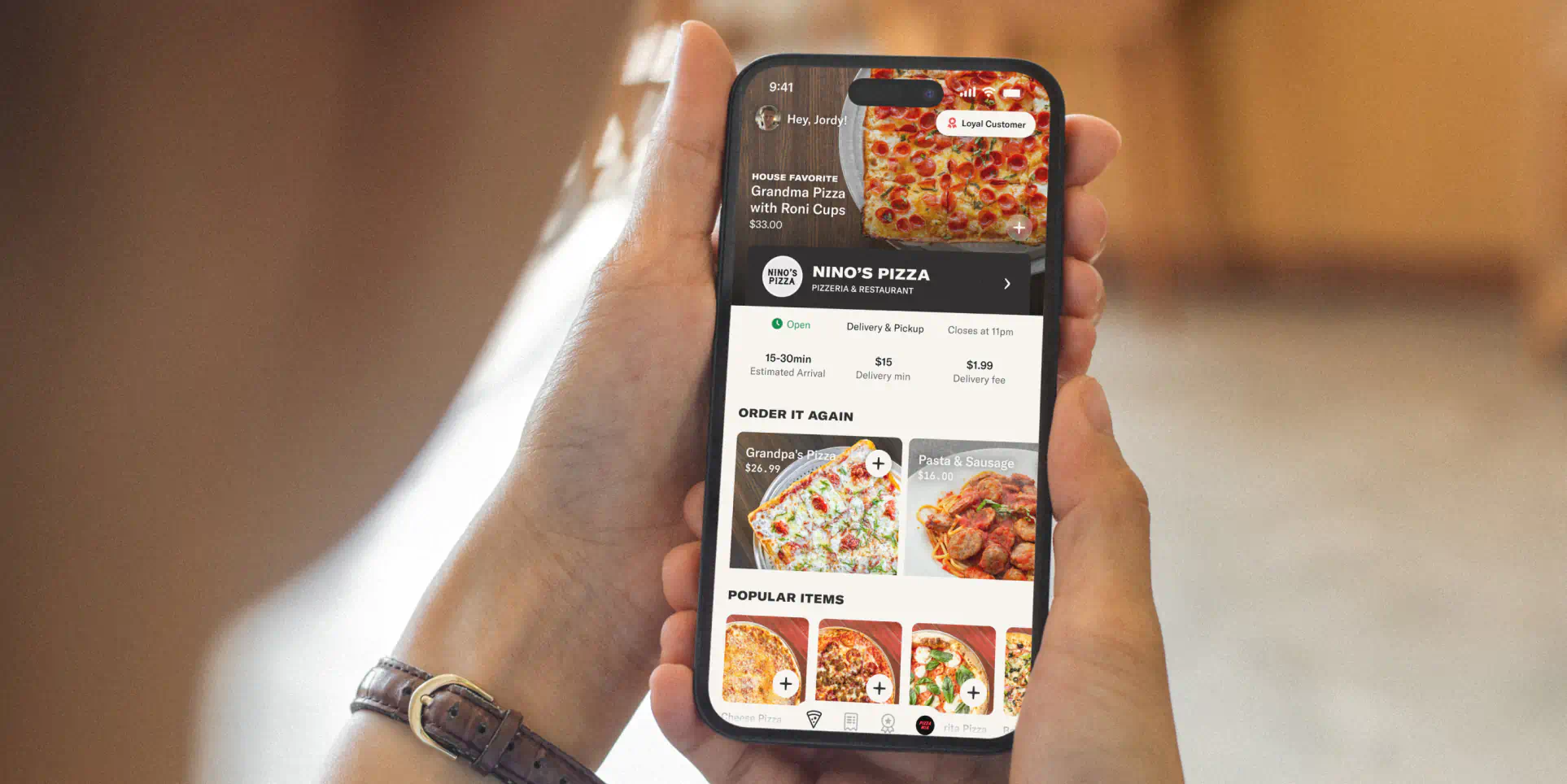
Is yours set up well enough to actually grow your shop?
This is the complete guide to online ordering for pizzerias: from understanding what the shift costs you, to choosing the right platform, to getting more orders.
We’ve broken it into sections you can use as a reference when specific problems comes up.
Everything here is taken from Slice’s data across tens of thousands of independent shops, owner interviews, and other research.
Section 1: Why online ordering matters
All owners know they should be doing online ordering. Not many have done the math on what not doing it well is costing them.
The average online order at an independent pizzeria regularly exceeds $55.
The average phone order comes in under $25.
That’s a $30 difference. At 20 online orders a day, that gap is $600 more per day (or $219,000 per year), from the same customer base ordering a different way.
If your shop does 2,900 orders a month, a normal volume for a $1M shop, the difference between a phone-heavy order mix and an online-heavy one adds up fast.
Most online orders come through third-party apps, which means your shop is losing up to 30% of the revenue on those orders to commissions. But, the shops that build a strong direct online channel keep that margin for themselves.
This is math. Shops that tighten up online ordering can unlock an additional $35,000 annually, without adding a location, raising prices, or spending on ads.
Continued reading →
- → Online ordering Is table stakes for independent pizzerias: What the data says, and what it means for your shop
- → Is your shop ready for online ordering? A short quiz to let you know if you’re ready
- → The independent pizzeria advantage in 2026: You’re not a chain. Here’s how to use that
$30 — The difference in average order value between an online order and a phone order. At 20 orders a day, that’s $600 more per day — or roughly $219,000 per year — from the same customer base, just ordering a different way.
→ See the full breakdown: “Where Is the Money Hiding in Your Pizza Shop?”
Section 2: The real cost of phone orders
Phone orders feel free: no commission, no platform fee, no percentage going out the door.
But the cost of running a phone-first ordering operation shows up in labor, errors, capacity, and revenue.
The hidden labor costs of phone ordering can amount to up to $1,500 per month for the average pizzeria, from staff time taking calls, managing corrections, and re-entering orders. That’s before you account for lost orders.
The pausing problem is where it gets more expensive.
When a rush hits, a lot of shops’ instinct is to turn off online ordering to catch up. The average online order at a Slice shop during a rush is $73, compared to $44 on a regular day. Pausing online ordering during those windows can cost a shop $4,380 in lost revenue.
Pausing doesn’t reduce demand, it delays it. When orders come back on, customers place orders all at once, creating a second surge that’s harder for staff to manage.
The data from The Independent’s report reinforces this from a different angle: the average delivery time across independent shops is 56 minutes, and the average pickup time is 32. Shops that manage their online order flow with ETA buffers instead of shutoffs, keep those numbers tight and keep customers coming back.
Continued reading →
- → Phone orders are quietly losing you money: The $18K phone call
- → Pausing online ordering during a rush can cost you $4,000+: What happens when you go offline, and a better way to manage volume
- → What is impacting your pizzeria’s order volume: Everything you need to know (+ a free worksheet)
- → What customers do when you don’t pick up: The behavior data behind missed calls (COMING SOON)
- → The benefits of phone orders vs. online ordering: A performance breakdown: Side-by-side comparison (COMING SOON)
Section 3: Choosing the right platform
Not all online ordering platforms are the same. Differences show up in your margins, your customer relationships, and how much control you have over your shop.
The most important distinction is first-party vs. third-party.
Third-party apps — DoorDash, Uber Eats, etc. — bring discovery, but they take 20–30% per order in commissions, they own the customer relationship, and they don’t give you the data.
First-party ordering, through your own website or a platform like Slice, keeps the customer relationship yours and the margins intact.
What to evaluate when choosing a platform:
- Commission structure.
- A flat fee beats a percentage at almost any order volume. Run your own numbers, not a vendor’s theoretical model.
- Ease of setup and menu management.
- A platform that takes two days to update your menu is a problem you’ll feel every week.
- Customer data ownership.
- If the platform doesn’t give you customer contact info, you can’t do any direct marketing or follow-up. This is more valuable than most owners realize until they switch.
- Integration with your POS and operations.
- Orders going to a separate tablet that someone has to re-enter into the POS is a labor cost and an error risk. Tighter integration means fewer mistakes and faster service.
- What the platform does during a rush.
- Can you adjust ETAs in real time? Can you throttle order flow without going dark? This is underrated.
Online orders regularly exceed $55 for shops using a direct online channel, compared to under $25 for phone orders and $22.38 for walk-ins.
The platform you’re on determines which of those numbers you’re building toward.
Continued reading →
- → What to look for in an online ordering platform for your pizzeria: The five questions to ask before you commit (+ free worksheet)
- → First-Party vs. Third-Party online ordering: A city guide for pizza shops: Market-by-market breakdown of what works where (COMING SOON)
- → Commission vs. flat fee: What the math actually looks like: Run the numbers at your volume (COMING SOON)
- → First-Year Technology Costs for Pizza Shops: What to expect and how to budget it (COMING SOON)
81.35% — The average share of sales at top-performing independent pizzerias that come from repeat customers. The shop that makes it easiest to reorder wins the regular. Online ordering is the infrastructure that makes reordering easy.
→ Source: The Independent by Slice
Section 4: Setting up for success
Getting online ordering set up in a way that actually converts takes a little more intention.
The three areas that trip up most shops at setup:
1. Menu architecture
Online menus and in-store menus aren’t the same thing. Online, you need descriptions that tell the customer what they’re getting. You need photos. You need modifiers set up so upsells happen naturally, not just when a staff member remembers to ask. The average Slice shop has 140 menu items. That’s a lot of surface area to get right.
2. Checkout and payment flow
If the checkout experience doesn’t work cleanly on mobile, you’re losing a significant share of potential orders. Mobile is where most of your customers are placing orders. A clunky handoff between menu and payment is where a lot of shops quietly hemorrhage orders they never see.
3. ETA management
This is the operational variable most shops underestimate. Your estimated time at order is a promise. If you’re consistently late on that promise, it shows up in reviews before it shows up in anything you can measure. Set accurate ETAs, and have a plan for adjusting them during rushes.
Continued reading →
- → The complete online ordering setup checklist: A free worksheet to help you make more $$
- → How to write a pizzeria menu that converts online: Descriptions, modifiers, photos, and upsells (COMING SOON)
- → Common setup mistakes (and how to fix them before they cost you): The errors that quietly kill conversion (COMING SOON)
- → Handling phone lines during peak hours: A pizza shop staff guide: Managing the transition period when you’re building online volume (COMING SOON)
- → How to get your online ordering link in front of more customers: Google, Instagram, receipts, packaging: where the link goes next (COMING SOON)
Free download!
⤓ The setup checklist — One page. Every important decision you need to make. Print it out and work through it before you go live (or use it to audit what you already have.)
Section 5: Getting more orders once you’re live
Setup is done. The shops that grow online orders deliberately are doing a small number of things consistently, and none of it requires a marketing budget.
- Put your online ordering link everywhere it needs to be.
- Google Business Profile. Instagram profile. Packaging. Receipt tape. Email signature. Make your link unavoidable.
- Use your regulars.
- 81% of sales at top pizzerias come from repeat customers. The customers who already love your shop are your most reliable source of online order volume. If they’re currently calling, they’ll switch channels if you make it easier — a card in the box, a note on the receipt, a post that makes it obvious.
- Run promotions that make sense.
- A discount that only applies to online orders is a channel-shift tool. A blanket discount that applies everywhere just costs you margin. The framing matters: “Order online and skip the wait” is better than “10% off for online orders” — same offer, but one leads with a benefit instead of a discount.
- Don’t pause during rushes.
- The rush is when online ordering is most valuable to you. Those orders average $73 at a Slice shop during peak hours. The answer to a surge isn’t to go dark — it’s to buy time with ETA adjustments and let the system work.
- Track your online order percentage over time.
- If you’re not watching this number monthly, you don’t know if what you’re doing is working. The goal is a steady increase in the share of orders coming through your direct online channel, at the expense of both phone orders and third-party app volume.
Continued reading →
- → How to promote online ordering without spending money on ads: In-store, in-box, and online touchpoints most shops ignore (COMING SOON)
- → Running a promotion that actually drives online orders: What works, what doesn’t, and how to tell the difference (COMING SOON)
- → Getting repeat orders from customers who’ve already found you: Follow-up moves that turn a first order into a regular
- → Future of online ordering: What owners expect in 2026 — Expo recap: What independent owners said on stage at Pizza Expo (COMING SOON)
Section 6: Real shops, real results
Most shops see meaningful movement in their channel mix within 60–90 days of actively directing customers to their online ordering link.
The shops that grow fastest aren’t necessarily doing the most, they’re doing the right things consistently. Link in bio. Card in the box. ETA management during rushes. Menu photos. These are free or close to free. They compound.
The margin difference between phone orders (under $25 avg.) and direct online orders ($55+ avg.) means every order you shift to your direct channel is roughly $30 of incremental revenue. At scale, that’s the $35,000 that’s already sitting there.
Continued reading →
- → How online ordering resulted in [Revenue Lift] for [Shop Name]: Case study
- → How one person can run a high-volume pizza night (and still go home sane): Operations + online ordering together
- → The independent pizzeria revenue challenge: Small business week edition: Owner stories from the field
Section 7: The online ordering landscape in 2026
The context has shifted in the last 18 months in ways that matter for independent shops.
Chain pizza transactions dropped 10.4% year-over-year in 2025. Consumers are moving toward shops they trust, ordering smaller and more specialized — quality over cheap and fast. This is the tailwind independent pizzerias have been waiting for, and online ordering is the infrastructure that lets you capture it.
Two trends to watch
Delivery economics are getting better for shops with direct channels.
Third-party delivery fees haven’t gone down, but more shops are using their own drivers for nearby orders and platform drivers for overflow. This only works if you have a direct ordering channel that feeds into a real POS.
Customer expectations for accuracy and speed are higher than ever.
The average delivery time across independent shops is 56 minutes. The shops trending in the right direction are the ones managing their operational data in real time — queue monitoring, ETA buffers, preorder volume — rather than reacting after the rush.
The shops that are building direct online ordering infrastructure now are the ones that will be positioned to compete when customer expectations keep climbing.
Continued reading →
- → 2026 Pizza Industry Predictions: Trends and insights for independent pizzerias: The full industry outlook
- → Why your pizza shop doesn’t need more seats, it needs more demand: Revenue growth without a bigger footprint
- → What is online ordering for pizzerias? (And why it’s different for independents): If you’re starting from scratch, this is the foundation
$4,380 — The estimated revenue lost each time a shop pauses online ordering during a dinner rush. The rush is exactly when you can least afford to go dark.
→ Full breakdown: “Pausing Online Ordering During a Rush Can Cost You Thousands”
Section 8: Online ordering and your operations are the same problem
One thing that gets missed in a lot of online ordering content: it’s not a marketing decision. It’s an operations decision that happens to have marketing effects.
Your ETA accuracy affects reviews. Your menu organization affects average order value. Your checkout flow affects how many people complete an order vs. abandon it. Your channel mix affects your labor cost per order. These aren’t separate problems.
The shops that get the most out of online ordering treat it as core infrastructure — updated when the menu changes, monitored during rushes, and evaluated monthly on the metrics that actually matter: percentage of orders coming through direct channels, average order value by channel, and order completion rate.
Continued reading →
- → Your pizzeria menu is too long: How to trim it and make more money (+ free worksheet)
- → How to staff your pizza shop for a Friday night rush (without the chaos): Operations and online ordering together (COMING SOON)
- → Collecting and using customer data to boost your pizzeria: What to do with the data your direct channel gives you (COMING SOON)
- → Small Business Week: The Independent Pizzeria revenue challenge: Week-long challenge with daily actions and benchmarks (COMING SOON)
How Slice fits in
Slice builds online ordering infrastructure for independent pizzerias. We think it’s worth being direct about that instead of pretending otherwise.
Everything in this guide is here because it’s useful, not because it points back to Slice. If you work through these sections and set up online ordering through a different platform, that’s a good outcome. You’ll be in better shape than most.
If you want to see specifically how Slice works — the fee structure, what the owner tools look like, how setup actually goes — that’s what slice.com/products/online-pizza-ordering-system is for.
One thing worth mentioning: shops on Slice that refer another pizzeria earn up to $1,500. If you’re already on the platform and know someone who should be, that’s at slice.com/referrals.

This guide is maintained by the Slice content team and updated as new data becomes available. Last updated: March 2026. Data from The Independent, Slice platform aggregate stats, and owner interviews.